Category: Sport

Toute l’actualité sportive, les résultats en direct, les classements et les analyses des experts de News 24.

  • Most Iconic La Liga Midfielders Who Dictated Play

    Most Iconic La Liga Midfielders Who Dictated Play

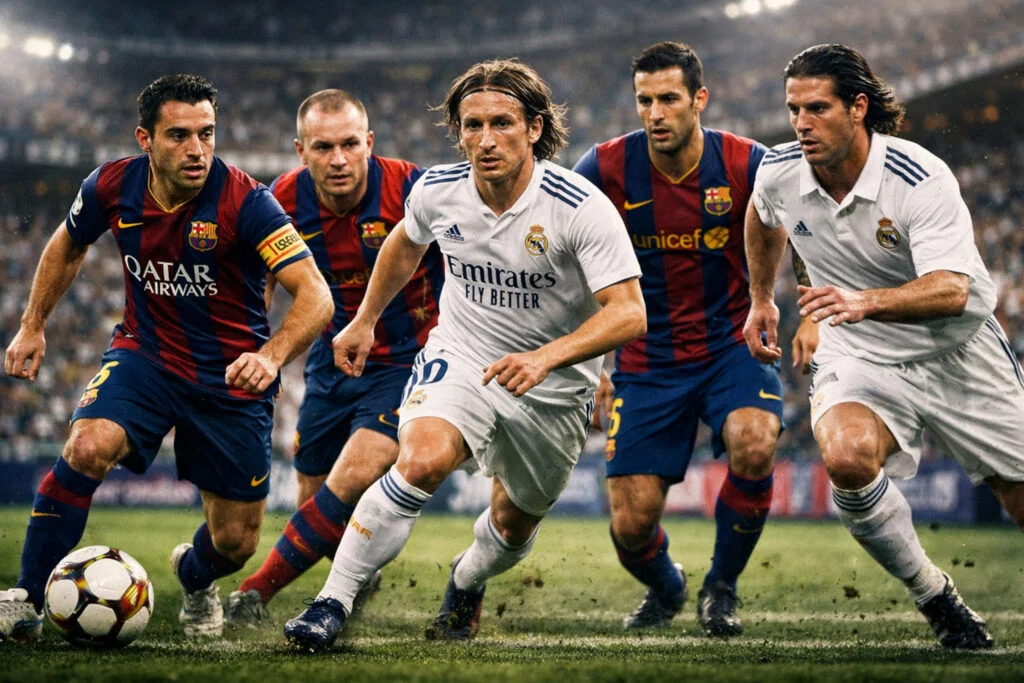
    La Liga has always treated midfield control as a craft. Tempo, angles, patience, nerve. The league rewarded players who could slow a match to walking pace, then accelerate it with a single decision. What follows is not a highlight reel of screamers from 30 yards, but a look at the conductors who shaped games, seasons, and in a few cases, football itself.


    Xavi Hernández

    Xavi turned possession into an ideology. At Barcelona, the ball rarely felt loose or rushed. His genius sat in timing rather than flair. He knew when to recycle, when to split lines, and when to suffocate an opponent by denying them oxygen, also known as the ball. Under Guardiola, Xavi became the metronome of tiki-taka, but his influence extended beyond systems. Opponents knew that chasing him was a waste of energy. He had already passed and moved before the press arrived.

    Barcelona La Liga titles during his peak years were built on territorial dominance. Xavi often completed over 90 passes per match in league play, with accuracy that made pressing plans collapse by minute twenty.


    Andrés Iniesta

    Iniesta dictated play in a quieter way. Where Xavi controlled rhythm, Iniesta dissolved pressure. Tight spaces became invitations rather than traps. He carried the ball through midfield lines when passing lanes closed, turning defensive blocks into broken shapes.

    In La Liga, Iniesta was often the release valve in games where Barcelona faced deep defensive lines. He did not dominate through volume, but through timing. One carry, one disguised pass, and the match tilted. His ability to control tempo while moving forward separated him from almost everyone else who played the role.


    Luka Modri?

    Modri? brought a different flavour to La Liga control. Less positional, more elastic. At Real Madrid, he balanced chaos. Surrounded by runners, finishers, and transitions, Modri? ensured the game never slipped into panic.

    What defined him was adaptability. He could slow matches in European knockouts, then turn league fixtures into controlled counter-attacking displays. His passing range allowed Madrid to bypass presses rather than absorb them. Even in his mid thirties, Modri? remained the player teammates looked for when a game needed calming.


    Sergio Busquets

    Busquets dictated games without appearing to move much at all. His influence sat in positioning and anticipation. He cut passing lanes before they opened and played forward passes before opponents set their feet.

    In La Liga, Busquets often touched the ball more than anyone else on the pitch. He linked defence to midfield, midfield to attack, and did so with minimal fuss. His reading of space allowed Barcelona’s full-backs and interiors to take risks, knowing the safety net was already in place.


    Fernando Redondo

    Before possession football became a doctrine, Redondo controlled matches through elegance and authority. At Real Madrid in the late 1990s, he blended Argentine technique with European discipline. He could slow games to a crawl, then explode through midfield with a surge that felt almost theatrical.

    Redondo’s La Liga influence was about balance. He defended without wrecking rhythm and attacked without losing structure. His style felt ahead of its time, a prototype for the modern deep-lying playmaker.


    Other Midfielders Who Shaped the League

    La Liga’s history is deeper than any shortlist. Players like Pep Guardiola set the foundations for positional control in the 1990s, while Juan Carlos Valerón ran Deportivo’s title challenge through intelligence rather than power. Each reflected the league’s preference for brains over brawn.


    La Liga Control Midfielders at a Glance

    Player Clubs Primary Role La Liga Titles Defining Trait
    Xavi Hernández Barcelona Deep playmaker 8 Tempo control
    Andrés Iniesta Barcelona Interior creator 9 Press resistance
    Luka Modri? Real Madrid Advanced controller 3 Game management
    Sergio Busquets Barcelona Holding midfielder 9 Positional intelligence
    Fernando Redondo Real Madrid Deep controller 2 Balance and elegance

    Why La Liga Produced So Many Controllers

    The league’s tactical culture rewarded patience. Technical security mattered more than physical dominance, and youth systems prioritised spatial awareness from an early age. Matches were often decided by who controlled midfield zones rather than who won aerial duels. That environment allowed players like Xavi and Iniesta to thrive, and encouraged others like Modri? to refine their craft rather than abandon it.


    Final Thoughts

    Dictating play in La Liga has never been about shouting instructions or crunching tackles. It has been about knowing when to wait, when to accelerate, and when to deny the opponent any meaningful choice at all. The midfielders above did not just play the game. They authored it.


    Optional Alternative Title

    The Midfield Conductors Who Defined La Liga’s Rhythm

    SEO Meta Description

    Explore the most iconic La Liga midfielders who dictated play, from Xavi and Iniesta to Modri? and Redondo, with analysis, stats, and tactical insight.
    Source link

  • The Best Bundesliga Seasons of the 21st Century

    The Best Bundesliga Seasons of the 21st Century

    2012 to 13, Bayern Munich’s Perfect Machine

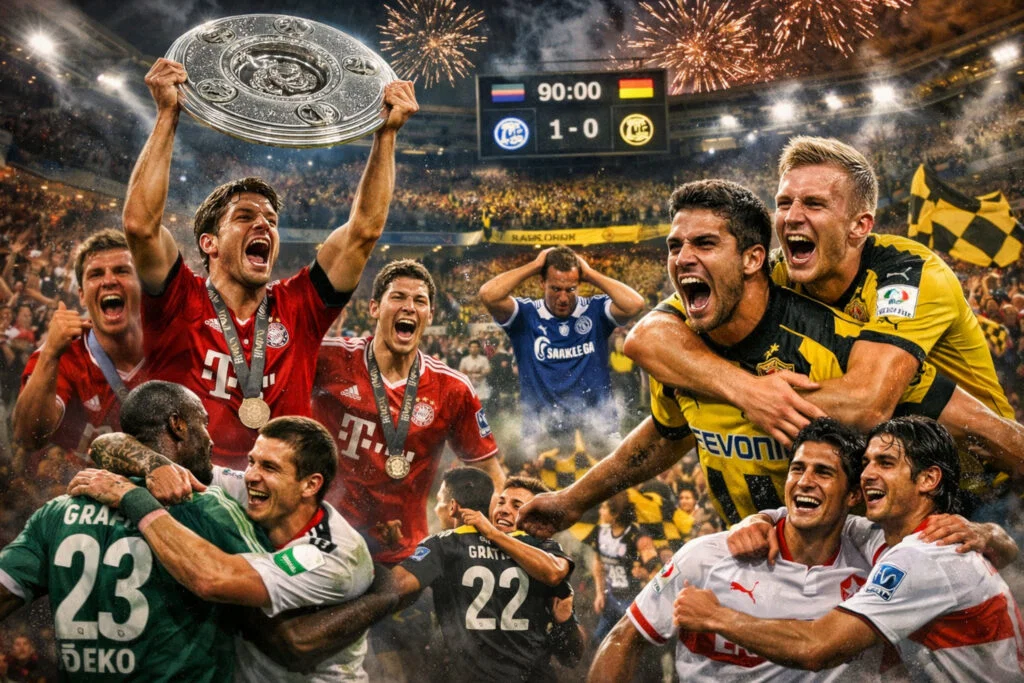
    Bayern Munich did not just win the league, they removed any doubt that it was the best side Europe had seen in years. Jupp Heynckes built a team that crushed records with a calm ruthlessness. The title was wrapped up in March, the points tally smashed previous marks, and the season ended with a historic treble.

    There was no weekly tension at the top, but the quality was absurd. This Bayern side pressed, rotated, and controlled games like a team from the future, only with better wingers.

    Metric Bayern Munich
    Points 91
    Goal difference +80
    Losses 1
    Top scorer Mario Mandžuki? (15)

    2000 to 01, The Title That Fell From the Sky

    Bayern Munich again, but this time through chaos rather than control. Schalke thought they were champions. Fans were already celebrating. Then a last-gasp equaliser in Hamburg flipped history on its head.

    This season remains legendary because it felt alive until the final kick. It was messy, emotional, and deeply Bundesliga in spirit.

    Club Points Final position
    Bayern Munich 63 1st
    Schalke 04 62 2nd

    2010 to 11, Dortmund’s First Klopp Shockwave

    Borussia Dortmund arrived early under Jürgen Klopp and nobody quite believed it would last. Then the wins kept coming. Young players, full throttle pressing, and a clear identity took Dortmund to a title that felt like a cultural reset.

    This was the season the Bundesliga got loud again, and not just in the Yellow Wall.

    Metric Borussia Dortmund
    Points 75
    Average age of squad 24.4
    Clean sheets 15
    Key player Nuri ?ahin

    2008 to 09, Wolfsburg’s One-Season Wonder

    VfL Wolfsburg winning the Bundesliga still feels faintly unreal. Powered by the strike partnership of Grafite and Edin Džeko, Wolfsburg went on a second-half tear that no one could match.

    It was not pretty football every week, but it was devastating when it clicked. This remains the ultimate reminder that lightning can strike once.

    Player Goals
    Grafite 28
    Edin Džeko 26

    2011 to 12, Dortmund Do It Again and Break Records

    Borussia Dortmund proved the first title was no accident. This season added swagger and numbers to the story, including a then record points tally and an unbeaten run that stretched deep into spring.

    The Bayern rivalry sharpened here, and the league benefitted from it.

    Metric Borussia Dortmund
    Points 81
    Unbeaten streak 28 matches
    Wins 25

    2018 to 19, Bayern vs Dortmund Until the Nerves Gave Way

    Borussia Dortmund pushed Bayern harder than almost anyone in the modern era. Dortmund led late, faltered under pressure, and Bayern pounced as they so often do.

    It was not a classic champion story, but it was a classic title race. For months, every weekend mattered.

    Club Points
    Bayern Munich 78
    Borussia Dortmund 76

    2006 to 07, Stuttgart’s Youthful Surge

    VfB Stuttgart leaned into youth and rode momentum all the way past better funded rivals. The squad was fearless, quick, and wildly inconsistent in experience, which somehow made it more fun.

    This season tends to get overlooked, but it deserves more credit for breaking the usual script.

    Key players Age at the time
    Mario Gómez 21
    Sami Khedira 20

    Why These Seasons Resonate

    The best Bundesliga seasons tend to fall into two camps. Total dominance that resets expectations, or chaotic races that grip the league until the final day. Both shape how the competition is remembered and how clubs plan for the future.

    The 21st century has given the Bundesliga both extremes, and that balance is why its history remains worth revisiting. If you argue about any of these rankings, that probably means the league did its job.

    Source link

  • Deadline Day Shockers and Left Field Moves: 30 Transfers Nobody Saw Coming

    Deadline Day Shockers and Left Field Moves: 30 Transfers Nobody Saw Coming

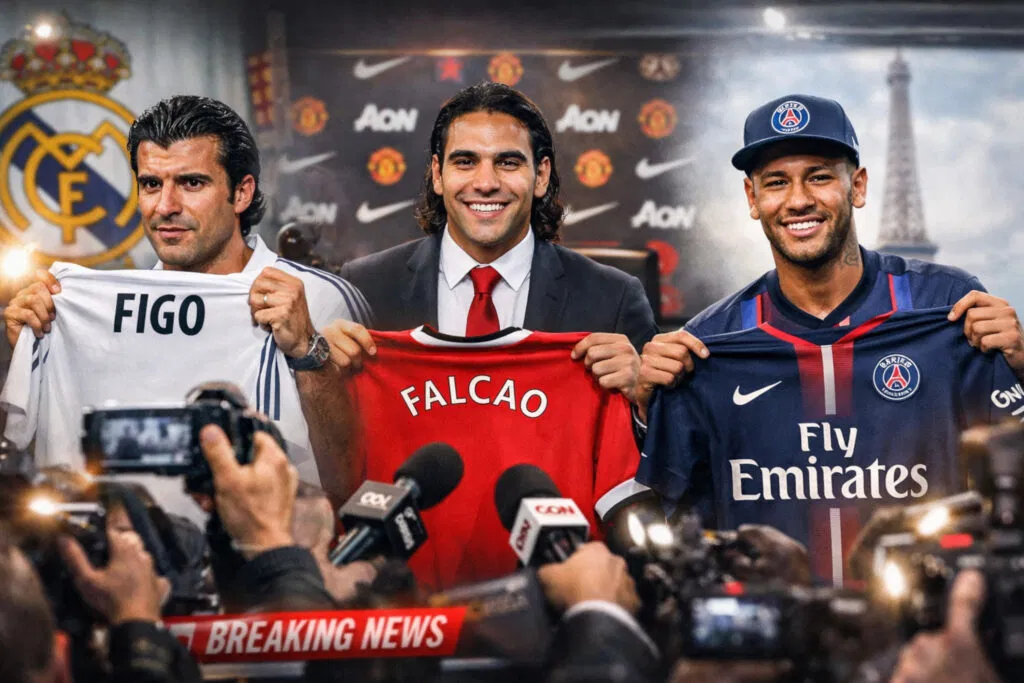
    Football transfers rarely land in the middle ground. They are either heavily trailed for weeks or arrive like a thunderclap. This list focuses on the latter. These were deals that rewired rivalries, ignored logic, or simply made everyone double check the breaking news banner. Some worked, some fizzled, a few still feel strange years later.


    Galáctico-Level Whiplash

    Player From To Year Fee (approx) Why it shocked
    Luis Figo Barcelona Real Madrid 2000 £37m Crossed the most hostile divide in football
    Sol Campbell Tottenham Arsenal 2001 Free Walked straight into enemy territory
    Carlos Tevez Man United Man City 2009 £25m Announced City’s new era in one move
    Robin van Persie Arsenal Man United 2012 £24m A title winner wearing red felt wrong
    Zlatan Ibrahimovi? Barcelona AC Milan 2010 Loan Abandoned the Pep project overnight

    These transfers did not just move players. They shifted power and provoked fury. Some still get boos decades later.


    Deadline Day Chaos

    Player From To Year Fee (approx) Why it shocked
    Fernando Torres Liverpool Chelsea 2011 £50m Record fee, instant disbelief
    Radamel Falcao Monaco Man United 2014 Loan Felt too big to be true
    Antoine Griezmann Atlético Madrid Barcelona 2019 £107m A saga ending nobody enjoyed
    Mesut Özil Real Madrid Arsenal 2013 £42.5m Arsenal breaking character
    Dimitar Berbatov Tottenham Man United 2008 £30.75m Snatched at the finish line

    Deadline day creates panic, ego, and occasionally history. It also creates deals clubs spend years explaining.


    When Logic Took the Day Off

    Player From To Year Fee (approx) Why it shocked
    Alexis Sánchez Arsenal Man United 2018 Swap Massive wages, minimal payoff
    Neymar Barcelona PSG 2017 £198m Broke football’s ceiling
    Cristiano Ronaldo Real Madrid Juventus 2018 £88m A late career curveball
    Kaká AC Milan Real Madrid 2009 £56m Balloon d’Or winner lost in the noise
    Paul Pogba Juventus Man United 2016 £89m Record fee to fix a familiar problem

    These were moves powered by brand, ambition, or impulse rather than neat squad planning.


    From Obscure to Centre Stage

    Player From To Year Fee (approx) Why it shocked
    Jamie Vardy Fleetwood Leicester 2012 £1m Non league to Premier League
    N’Golo Kanté Caen Leicester 2015 £5.6m Unknown to indispensable
    Riyad Mahrez Le Havre Leicester 2014 £400k One of the great scouting wins
    Erling Haaland Molde Salzburg 2019 £8m A warning nobody fully heeded
    Virgil van Dijk Southampton Liverpool 2018 £75m Fee mocked, result decisive

    Surprise does not always mean famous names. Sometimes it is the scale of what follows.


    Veteran Moves Nobody Predicted

    Player From To Year Fee (approx) Why it shocked
    David Beckham Real Madrid LA Galaxy 2007 Free Redefined MLS ambition
    Andrea Pirlo Juventus NYCFC 2015 Free A regista in baseball stadiums
    Thierry Henry Barcelona NY Red Bulls 2010 Free Arsenal royalty crossing the Atlantic
    Wayne Rooney Everton DC United 2018 £10m Prime name, unexpected stage
    Zlatan Ibrahimovi? Man United LA Galaxy 2018 Free Arrival by billboard

    These deals changed leagues as much as teams, often dragging global attention with them.


    What These Transfers Tell Us

    Shock transfers usually share a few traits. Rivalries ignored, fees that reset expectations, or timing that feels off. Clubs sometimes chase statements rather than solutions. Players sometimes chase freedom or legacy rather than trophies. When those motives collide, you get moves that still feel strange long after the shirts have been swapped.

    Source link

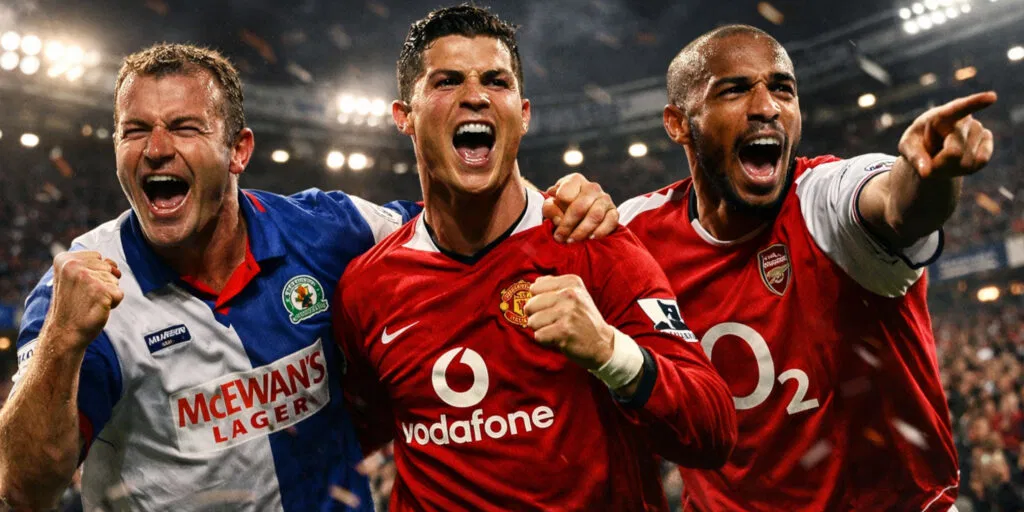
  • Top 10 Premier League Transfers That Paid Off Big

    Top 10 Premier League Transfers That Paid Off Big

    Big fees do not guarantee big success. The Premier League has seen plenty of expensive misfires, but every so often a signing lands perfectly, changing a club’s trajectory and sometimes the league itself. This list focuses on value, impact, trophies, longevity, and legacy rather than pure hype. Some were bargains at the time, others raised eyebrows. All of them delivered.


    10. Riyad Mahrez to Leicester City (2014, £400k)

    Leicester buying a winger from Le Havre for loose change felt like sensible squad depth. Two seasons later, Riyad Mahrez was tearing full backs apart and lifting the Premier League trophy. His technique, goals, and end product turned Leicester from survival candidates into champions. When Manchester City later paid around £60m for him, the profit was absurd.

    Why it paid off: elite output for a non league fee, title winning impact, huge resale value.


    9. Andrew Robertson to Liverpool (2017, £8m)

    Signed from relegated Hull City, Andrew Robertson was initially seen as competition, not a cornerstone. He became one of the most productive full backs in league history, redefining the role under Jürgen Klopp and winning everything available.

    Why it paid off: consistency, durability, trophies, elite assists from a budget fee.


    8. N’Golo Kanté to Leicester City (2015, £5.6m)

    Some players change matches. N’Golo Kanté changed the geometry of the pitch. Leicester’s title run was powered by his endless pressing and ball recovery. Chelsea then bought him and immediately won the league again.

    Why it paid off: immediate transformation of team balance, back to back titles, elite reputation.


    7. Virgil van Dijk to Liverpool (2018, £75m)

    At the time, the fee felt outrageous for a defender. Virgil van Dijk justified it within months. Liverpool’s defensive chaos disappeared, the Champions League followed, then the Premier League. The price now looks sensible, even cheap.

    Why it paid off: leadership, defensive dominance, silverware, longevity at elite level.


    6. Eric Cantona to Manchester United (1992, £1.2m)

    Modern Premier League dominance arguably starts here. Eric Cantona arrived from Leeds and turned United from contenders into serial winners. He gave them belief, edge, and swagger.

    Why it paid off: multiple titles, cultural shift, era defining influence.


    5. Mohamed Salah to Liverpool (2017, £36.9m)

    There were doubts after his Chelsea spell. Mohamed Salah erased them in weeks. Record breaking goal seasons, Champions League glory, and a Premier League title followed. He became one of the league’s most decisive attackers.

    Why it paid off: relentless goal output, global profile, sustained excellence.


    4. Kevin De Bruyne to Manchester City (2015, £55m)

    Chelsea let him go, City built an empire around him. Kevin De Bruyne became the league’s most complete midfielder, controlling games with passing range and intelligence.

    Why it paid off: creative dominance, multiple titles, tactical heartbeat of a dynasty.


    3. Cristiano Ronaldo to Manchester United (2003, £12.24m)

    Raw, frustrating, brilliant. Cristiano Ronaldo developed into the world’s best at Old Trafford. United won titles, a Champions League, and then sold him for a world record fee.

    Why it paid off: player development, trophies, massive commercial and resale return.


    2. Thierry Henry to Arsenal (1999, £11m)

    Converted from a winger into a striker, Thierry Henry became the Premier League’s most elegant destroyer. Goals, assists, and the Invincibles season cemented his status.

    Why it paid off: club icon, era defining footballer, unmatched attacking influence.


    1. Alan Shearer to Blackburn Rovers (1992, £3.6m)

    The most important early statement signing. Alan Shearer fired Blackburn to a Premier League title, then became the league’s all time top scorer. The fee was huge then. The return was historic.

    Why it paid off: goals, title win, long term legacy across clubs and league history.


    Transfer Impact Comparison

    Player Fee Paid Club Impact Major Honours
    Mahrez £400k Title winning winger Premier League
    Robertson £8m Elite full back era PL, UCL
    Kanté £5.6m Midfield dominance PL x2
    Van Dijk £75m Defensive overhaul PL, UCL
    Cantona £1.2m Cultural shift PL titles
    Salah £36.9m Record goal output PL, UCL
    De Bruyne £55m Creative control Multiple PL
    Ronaldo £12.24m Superstar growth PL, UCL
    Henry £11m Iconic striker PL x2
    Shearer £3.6m Title and records PL

    Source link

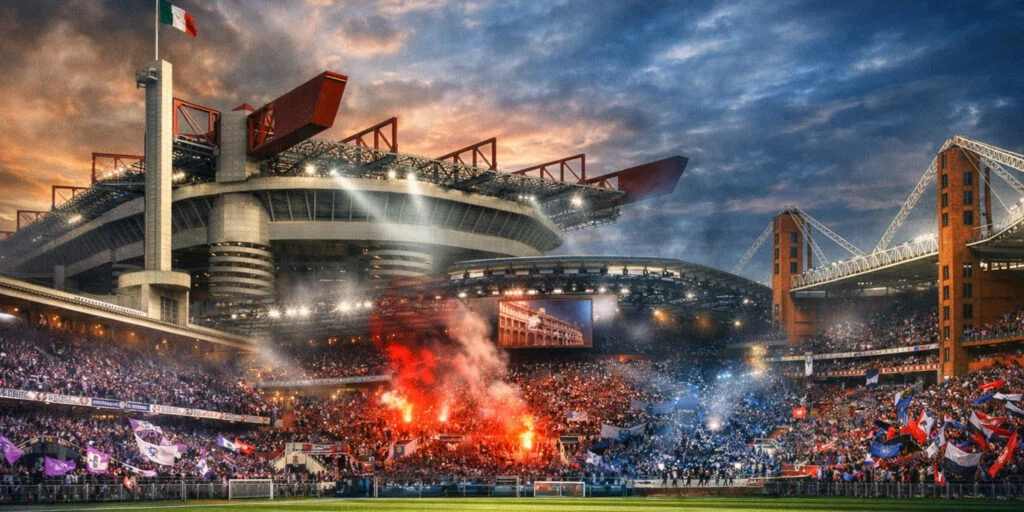
  • Historic Stadiums of Italian Football

    Historic Stadiums of Italian Football

    Italian football stadiums feel lived in. Many were shaped long before modern commercial pressures took over, and you can sense it in the tight stands, the acoustics, and the way the city seems to lean into the ground on matchday. This is a tour of the venues that still define the sport in Italy, not because they are perfect, but because they carry history comfortably.


    San Siro (Stadio Giuseppe Meazza)

    San Siro is impossible to separate from Milan itself. Opened in 1926 and later expanded into its current concrete cathedral, it has hosted World Cups, European finals, and decades of shared tenancy between rivals who rarely agree on anything else.

    The spiralling towers and sheer verticality make it feel intimidating even when empty. When full, the sound rolls around the bowl in waves, especially from the Curva Sud and Curva Nord.

    Detail Information
    City Milan
    Opened 1926
    Capacity Approx. 75,800
    Home clubs AC Milan, Inter
    Major finals European Cup, Champions League

    Built as part of Rome’s post-war redevelopment, the Olimpico sits within the Foro Italico complex and carries a slightly ceremonial feel. It has hosted Olympic ceremonies, World Cup finals, and some of the most emotionally charged derbies in Europe.

    Its scale is vast rather than intimate, but when Roma or Lazio are in full voice, particularly behind the goals, it feels anything but cold.

    Detail Information
    City Rome
    Opened 1953
    Capacity Approx. 70,600
    Home clubs Roma, Lazio
    Other uses Athletics, concerts

    Few stadiums are as emotionally tied to a single figure. Renamed in honour of Diego Maradona, this ground in Fuorigrotta remains a place of pilgrimage for Napoli supporters.

    It is not glamorous and never pretends to be. The steep stands trap noise, and the atmosphere often feels personal, even confrontational. On big European nights, it can overwhelm visiting sides long before kick-off.

    Detail Information
    City Naples
    Opened 1959
    Capacity Approx. 54,700
    Home club Napoli
    Renamed 2020

    Stadio Artemio Franchi

    Designed by Pier Luigi Nervi, the Artemio Franchi is as much an architectural statement as a football ground. Its sweeping curves and famous spiral tower mark it out from almost anything else in Italian football.

    Time has not been kind to its facilities, but the structure itself remains admired. There is an ongoing tension between preservation and modernisation, and for many supporters, that struggle is part of its identity.

    Detail Information
    City Florence
    Opened 1931
    Capacity Approx. 43,300
    Home club Fiorentina
    Design note Italian rationalism

    Stadio Luigi Ferraris

    Often overlooked internationally, the Luigi Ferraris is one of the oldest major football grounds still in use. Tucked into a residential area, it feels woven into the city rather than imposed on it.

    The stands are steep, close to the pitch, and the Derby della Lanterna turns it into one of Italy’s loudest venues. There is very little space to hide here, on or off the pitch.

    Detail Information
    City Genoa
    Opened 1911
    Capacity Approx. 36,600
    Home clubs Genoa, Sampdoria
    Notable feature Urban location

    Where to Buy Tickets for Italian Football Matches

    Buying tickets in Italy is usually straightforward, but it rewards a bit of planning. Most clubs sell directly through their official websites, often requiring a simple registration. For high-profile matches, particularly derbies or European fixtures, demand can be intense.

    Authorised resale platforms such as Vivaticket and TicketOne are widely used and reliable. Stadium ticket offices still exist at many grounds, though availability on matchday is less predictable than it once was.

    For visitors, club memberships are rarely required for league matches, but identification is sometimes requested at the gate, so bring photo ID.

    Source link

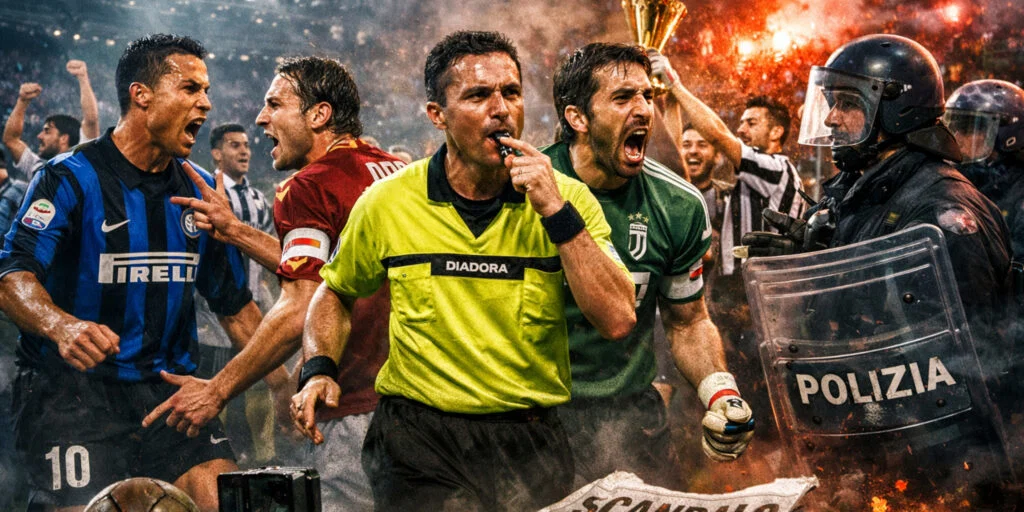
  • Serie A’s Most Controversial Moments

    Serie A’s Most Controversial Moments


    Italian football has always thrived on intensity. Tactical genius, regional pride, political undertones and fierce rivalries combine to make Serie A one of Europe’s most compelling leagues. With that passion comes friction. At times it has spilled into scandal, fury and decisions that are still debated in cafés from Turin to Palermo.

    Here are the moments that still raise voices whenever they are mentioned.


    Calciopoli, 2006

    No controversy in Serie A history comes close to the scale of Calciopoli.


    In 2006, investigations revealed a network of relationships between club executives and refereeing officials. The most prominent figure was former Juventus general manager Luciano Moggi. Phone intercepts suggested influence over referee appointments. The fallout was seismic.

    Juventus were stripped of two league titles and relegated to Serie B. AC Milan, Fiorentina, Lazio and Reggina received points deductions. Italian football’s credibility suffered badly, especially coming just weeks after Italy won the World Cup.

    Juventus supporters maintain the punishment was politically charged and inconsistently applied. Others argue the sanctions were necessary to restore integrity. Nearly two decades later, the debate remains raw.


    The 1998 Ronaldo Penalty Incident

    Inter against Juventus in April 1998 was effectively a title decider.

    With Juventus leading 1 to 0, Ronaldo Nazário burst into the box and collided with defender Mark Iuliano. Inter expected a penalty. Referee Piero Ceccarini waved play on. Moments later, Juventus were awarded a penalty at the other end.

    The decision fuelled claims of bias and conspiracy, particularly given Juventus’ dominance in the era. Inter manager Gigi Simoni was later dismissed, though officially for unrelated reasons.

    For many Inter fans, that moment encapsulates decades of frustration. It is still replayed in highlight reels whenever rivalry week comes around.


    The 2002 Final Day Collapse

    On 5 May 2002, Inter travelled to Lazio knowing victory would secure the title. What followed was chaos.

    Inter lost 4 to 2. At the same time, Juventus beat Udinese to claim the Scudetto. The image of Ronaldo on the bench, in tears, became one of Serie A’s most enduring photographs.

    There was no single scandalous refereeing call here. Instead, suspicion lingered around competitive integrity, given Lazio’s complicated relationship with Inter and the broader politics of Italian football.

    Sometimes controversy is less about proof and more about perception. That day, perception ran wild.


    The 2012 Muntari Goal That Wasn’t

    AC Milan against Juventus in February 2012 produced a moment that accelerated calls for goal line technology.

    Sulley Muntari’s header clearly crossed the line before being clawed out by Gianluigi Buffon. The referee and assistants missed it. The match ended 1 to 1.

    Juventus went on to win the title that season, finishing four points ahead of Milan. The unawarded goal could have changed everything.

    The incident remains a textbook example used in arguments for technological assistance. In this case, reform followed outrage. Serie A eventually adopted goal line technology, but that did little to console Milan supporters.


    Roma vs Juventus, 2014 and the “Double Standards” Debate

    A dramatic 3 to 2 Juventus victory over Roma in October 2014 featured three penalties and a red card.

    Roma captain Francesco Totti famously claimed there were double standards in Italian football. His words resonated with many who felt Juventus benefited from favourable decisions during their dominant run under Antonio Conte.

    While refereeing reviews supported some calls, the optics were damaging. The match intensified scrutiny of officials and added fuel to an already combustible rivalry.

    Italian football does not need much encouragement to question authority. That night gave critics plenty to work with.


    Fan Unrest and the 2007 Catania Tragedy

    Not all controversy centres on referees or boardrooms.

    In February 2007, violent clashes between Catania and Palermo supporters led to the death of police officer Filippo Raciti. The tragedy forced the suspension of league matches and prompted sweeping security reforms.

    Italian stadium culture was placed under a harsh spotlight. Measures included stricter ticketing rules, improved surveillance and temporary stadium closures.

    It was a sobering moment that reminded everyone that football’s intensity carries responsibility. The game paused to reflect, and rightly so.


    VAR and the Modern Era

    Video Assistant Referee technology arrived in Serie A in 2017 with the promise of clarity. Instead, it introduced a new layer of argument.

    Supporters debate handball interpretations, offside margins and the consistency of reviews. Managers gesture at pitch side monitors as if they are confronting fate itself.

    VAR has reduced certain types of error. It has not reduced controversy. If anything, it has made disputes more forensic. Slow motion can clarify, but it can also amplify doubt.

    Italian football remains what it has always been, fiercely proud and deeply argumentative.


    TiF Takeaway

    Serie A’s history is intertwined with politics, regional identity and powerful institutions. Decisions are rarely viewed in isolation. They are interpreted through decades of rivalry and suspicion.

    That tension is part of the league’s identity. It fuels debate shows, late night radio and family arguments over Sunday lunch. It also ensures that every contentious call feels larger than life.

    For better or worse, controversy has shaped Serie A as much as tactics or trophies. And if history is any guide, the next flashpoint is never far away.

    Source link

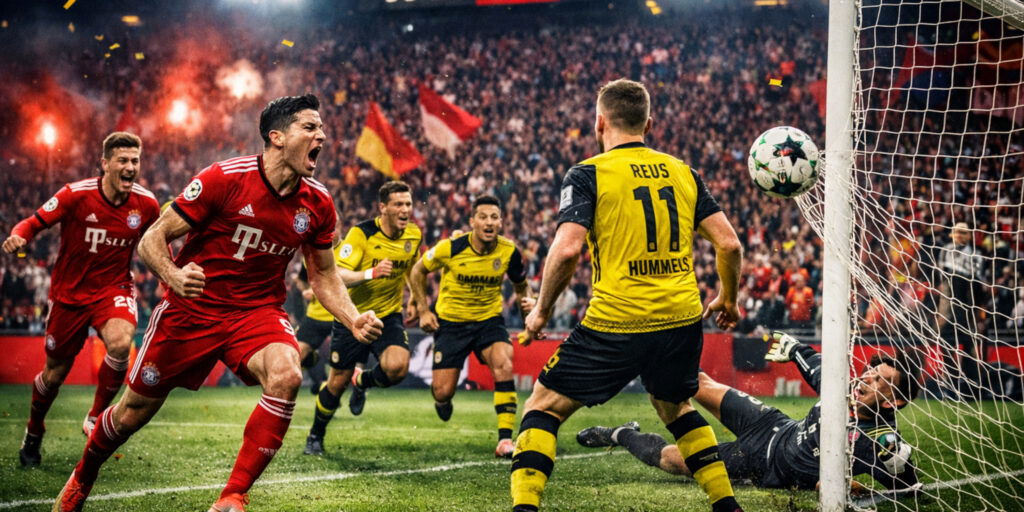
  • Bundesliga’s Most Memorable Matches

    The Bundesliga has never really done quiet afternoons. It does noise, emotion, nerve shredding drama and, occasionally, complete madness. Since 1963, Germany’s top flight has delivered matches that have shaped title races, defined rivalries and left entire cities pacing the living room at full time.

    Below are some of the most memorable games the league has produced. Not just for the scorelines, but for what they meant.


    Bayern Munich 5–1 Wolfsburg (2015)

    Date: 22 September 2015
    Stadium: Allianz Arena

    At half time, Bayern were losing. By full time, history had been rewritten.

    Introduced as a substitute, Robert Lewandowski scored five goals in nine minutes. It remains one of the most extraordinary individual bursts the Bundesliga has ever seen. Precision finishes, instinctive movement, and a stadium that shifted from mild concern to open disbelief in minutes.

    Match Snapshot

    Category Bayern Wolfsburg
    Final Score 5 1
    Shots 22 8
    Possession 63% 37%
    Lewandowski Goals 5

    The performance became shorthand for ruthless efficiency. You can still mention “nine minutes” in Germany and most fans know exactly what you mean.


    Borussia Dortmund 4–4 Schalke (2017)

    Date: 25 November 2017
    Stadium: Signal Iduna Park

    The Revierderby between Borussia Dortmund and FC Schalke 04 rarely lacks drama. This one went further.

    Dortmund raced to a 4–0 lead inside 25 minutes. It looked humiliating for Schalke. Then something flipped. Schalke clawed back four goals, equalising in the 94th minute. The away end exploded. The home end stood stunned.

    Head to Head Context

    Fixture Wins Dortmund Wins Schalke Draws
    All-time Bundesliga (approx.) 38 34 32

    Few derbies capture emotional whiplash quite like this one. It was less a football match and more a public test of cardiovascular resilience.


    Hamburg 2–1 Bayern Munich (2001)

    Date: 19 May 2001
    Context: Title decider

    On the final day of the 2000–01 season, Bayern needed to match or better Schalke’s result to win the title. Schalke had already done their job. In Gelsenkirchen, fans celebrated what they believed was a first championship in decades.

    In Hamburg, Bayern were seconds from losing the league. Then a dramatic free kick was awarded inside the box for an indirect offence. Patrik Andersson smashed it in. Bayern were champions. Schalke’s celebrations froze mid roar.

    It was brutal. It was theatrical. It was pure Bundesliga.


    Borussia Mönchengladbach 12–0 Borussia Dortmund (1978)

    Date: 29 April 1978
    Stadium: Bökelbergstadion

    Goal difference mattered. Borussia Mönchengladbach knew they needed a huge win to overhaul 1. FC Köln at the top.

    They delivered twelve goals. Twelve.

    It remains the biggest winning margin in Bundesliga history. Yet even that avalanche was not enough. Köln still won the title. A record breaking afternoon that somehow ended in disappointment.


    Bayern Munich 3–3 RB Leipzig (2023)

    Date: 20 May 2023
    Context: Title race twist

    The late stages of the 2022–23 season were chaotic. FC Bayern Munich dropped points at home against RB Leipzig, opening the door for Dortmund on the final day.

    It set up one of the most dramatic title conclusions in recent memory. The match itself featured swings in momentum, VAR tension, and an uncomfortable sense that Bayern’s era of dominance was wobbling.


    Classic Rivalry Record: Bayern vs Dortmund

    The so called Klassiker between FC Bayern Munich and Borussia Dortmund has produced countless high stakes encounters.

    Bundesliga Head to Head

    Category Bayern Dortmund
    Wins 67 34
    Draws 31
    Goals Scored 240+ 170+

    The numbers lean heavily towards Bayern, but the matches themselves often feel finely balanced. Dortmund have handed Bayern painful defeats. Bayern have crushed title dreams in return. It is a rivalry built on ambition and resentment in equal measure.


    Why These Matches Endure

    The Bundesliga thrives on atmosphere and volatility. Packed terraces, relentless pressing, and title races that can swing in seconds. German football culture values tradition, but it also embraces drama.

    The matches above are remembered because something shifted. A player rewrote the record books. A derby flipped on its head. A championship changed hands in injury time.

    That unpredictability is the league’s heartbeat. You can study the stats and track the trends, but every season still carries the feeling that something extraordinary might happen before the final whistle.

    And more often than not, it does.

    Source link

  • Guardiola’s Transfer Approach: Fit Over Fame

    Guardiola’s Transfer Approach: Fit Over Fame


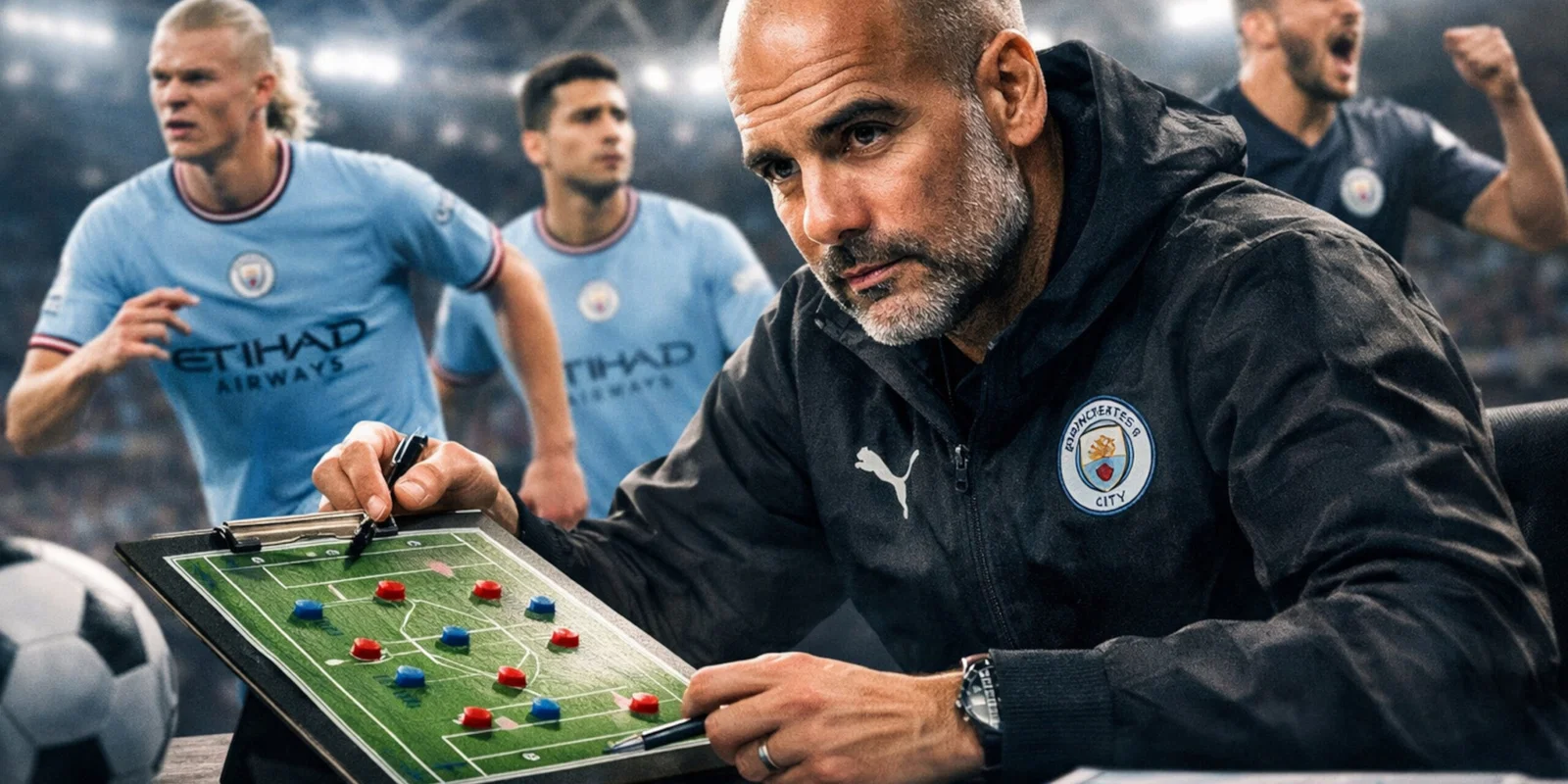
    In modern football, reputation sells shirts. Pep Guardiola prefers something else. He wants control, structure and players who understand space as well as they understand the ball.

    At Manchester City, the transfer strategy under Pep Guardiola has rarely chased glamour for its own sake. Instead, it has focused on profiles. Technical security. Tactical intelligence. Emotional discipline.

    City have signed big names, yes. But more often they have signed the right names. And that distinction matters.


    The Core Principle: System First

    Guardiola’s teams are built on positional play. Every movement affects five others. Every misplaced pass can collapse the structure. That means recruitment is not about who is famous. It is about who can function inside a complex machine.

    The priorities are consistent:

    • Technical consistency under pressure

    • Tactical adaptability across roles

    • Physical reliability over a long season

    • Personality that accepts coaching detail

    A player who thrives in chaos is rarely the ideal candidate. Guardiola prefers players who thrive in order.


    Case Study: Erling Haaland vs the “False Nine” Era

    When Erling Haaland arrived in 2022, critics wondered whether a traditional striker could function in Guardiola’s fluid system.

    The key was not reputation. It was alignment.

    Haaland’s profile offered:

    Head to Head: City Before and After Haaland

    Season Primary Striker Profile League Goals Possession % Shots per Game Titles Won
    2020–21 Rotational / False Nine 83 60.0 16.1 Premier League
    2021–22 Rotational / False Nine 99 67.6 18.8 Premier League
    2022–23 Haaland 94 65.2 17.3 Treble
    2023–24 Haaland 96 65.4 16.7 Premier League

    The possession numbers barely changed. The structure remained intact. What shifted was efficiency inside the box. That is a profile adjustment, not a philosophical shift.


    Underrated Signings That Defined the Era

    Some of Guardiola’s most important signings were not global superstars when they arrived.

    Rodri

    Rodri replaced Fernandinho not with flair but with control.

    He offered:

    • Positional discipline

    • Long passing accuracy

    • Defensive anticipation

    Without him, City’s build up rhythm slows and defensive transitions become vulnerable.

    Rúben Dias

    Rúben Dias arrived to stabilise a defence that conceded 35 league goals in 2019–20.

    The following season:

    Season Goals Conceded Clean Sheets League Position
    2019–20 35 17 2nd
    2020–21 32 19 1st

    Dias brought leadership and structural clarity. Fame followed performance, not the other way round.


    When City Walk Away

    Guardiola’s approach is defined as much by restraint as by spending.

    City have often stepped back from bidding wars for players who do not align with tactical needs. The club rarely chases high profile names simply to signal ambition. That discipline has kept squad balance intact.

    Even departures reflect this principle. Players who cannot adapt to inverted full back roles or central overload systems are moved on, regardless of reputation.


    Tactical Flexibility as a Recruitment Filter

    City’s recent evolution into a hybrid 3–2–4–1 shape demands multi positional intelligence.

    Full backs invert. Centre backs step into midfield. Wingers narrow into half spaces.

    Recruitment now prioritises:

    • Comfort in tight central areas

    • Decision making under aggressive pressing

    • Ability to interpret changing in game roles

    The modern Guardiola player is part midfielder, part analyst, part technician.


    Fit vs Fame: Comparative View

    To illustrate the difference, consider the broad comparison between high profile signings across Europe and Guardiola’s typical profile driven additions.

    Category Fame Driven Signing Guardiola Profile Signing
    Market Impact Immediate global buzz Moderate initial reaction
    Tactical Adaptation Often adjusted to system Selected for system
    Risk Level Higher ego and tactical risk Lower tactical risk
    Longevity Variable Typically sustained

    This is not about moral superiority. It is about structural coherence. A squad is a puzzle. Guardiola recruits pieces, not posters.


    The Human Element

    Guardiola is demanding. Training sessions are intense, detailed and repetitive.

    Players who arrive at City are expected to:

    Not every star enjoys that. The right profile does.


    TiF Takeaway

    Guardiola’s transfer approach is not anti star. It is anti distraction.

    At Manchester City, identity shapes recruitment. Fame is welcome, but only if it serves function. The system comes first. The individual thrives inside it or does not stay long.

    That clarity has delivered domestic dominance and European success. More importantly, it has delivered consistency.

    In an era obsessed with headlines, Guardiola keeps building quietly. Not with the loudest names, but with the right ones.


    Source link